

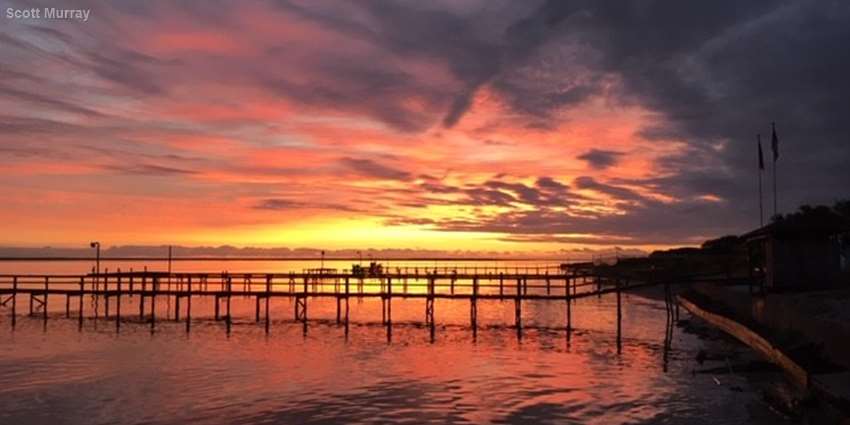
Development of a watershed protection plan to address water quality impairments in Petronila and San Fernando Creeks, two main tributaries of Baffin Bay, will soon get underway.
A team led by the Texas Water Resources Institute (TWRI) that includes the Coastal Bend Bays & Estuaries Program, the Nueces River Authority, Texas Sea Grant and the Harte Research Institute for Gulf of Mexico Studies at Texas A&M University – Corpus Christi recently received grant funding from the Texas State Soil and Water Conservation Board through its State Nonpoint Source Grant Program to lead local watershed stakeholders through the watershed protection planning process.
Lucas Gregory, Ph.D., TWRI senior research scientist in College Station, said that this process stems from the local desire to protect and improve water quality in Baffin Bay and keep its ecosystem healthy and productive.
“To address issues in the bay, you have to look to the watershed,” he said. “Petronila and San Fernando Creeks provide the bulk of water inflow to Baffin Bay and developing a plan that outlines voluntary management strategies to reduce water contaminants coming from those watersheds is the focus of this project.”
Improving water quality in Petronila and San Fernando Creeks
The EPA identified Petronila and San Fernando Creeks as having too much bacteria in them to meet Texas’ water quality standards for contact recreation since 2010 and 2006 respectively. The creeks also have elevated chlorophyll-a, an indicator of excess nutrients in water.
Clare Escamilla, TWRI research associate in San Antonio, said the project’s intent is to work with existing local groups such as the Baffin Bay Stakeholders Group and those engaged in the Baffin Bay Early Watershed Planning efforts among others to develop a locally driven plan that outlines strategies to protect and restore water quality.
“Getting local involvement from interested individuals and developing a voluntary plan of action is the first step to successfully improving and protecting water quality,” she said. “Our role is to facilitate this involvement and ensure that a functional and effective plan is produced.”
The project website is: https://twri.tamu.edu/baffinwpp. Leader will post information about future meetings, watershed plan components and other project details there as the project develops. Anyone interested in learning more about the project or getting involved in the planning process should visit the website and fill out the brief form to subscribe for email updates.
Watershed plan development meetings should start in early 2021. The project team is currently gathering information and preparing for future meetings. Until then, stakeholders who have signed up will recieve periodic updates about the project.
Contact:
Clare Escamilla, 210-277-0292 ext 205, clare.entwistle@ag.tamu.edu
Lucas Gregory, 979-845-7869, LFGregory@ag.tamu.edu


