

Author: Sarah Dormire
-
Big groundwater issues to be addressed in online conference, coffee breaks
The Permanent Forum of Binational Waters is hosting the U.S.-Mexico Transboundary Groundwater Conference, titled Innovation and Creativity: Strategies for Unprecedented Challenges. The interactive online event will be Oct. 14-15, 2020 via Zoom. Cohosts include Texas A&M University and the Instituto Mexicano de Tecnologia del Agua (IMTA). The forum’s objective in having the conference is to explore and analyze innovative perspectives on…

-
Texas dams are focus of new Texas Water Journal article
The Texas Water Journal has published a new article in the Volume 11 issue titled “Dams Are Coming Down, but Not Always by Choice: The Geography of Texas Dams, Dam Failures, and Dam Removals” by Erin D. Dascher and Kimberly Meitzen. The article examines spatial and temporal trends in Texas dams, dam failures and dam removals. Dams were…
-
EPA accepts Carancahua Bay Watershed Protection Plan
The U.S. Environmental Protection Agency (EPA) has accepted the Carancahua Bay Watershed Protection Plan (WPP), published by the Texas Water Resources Institute (TWRI). EPA accepted the plan as it meets the national guidelines for watershed-based plans and effectively outlines a strategy to improve the watershed, plan developers said. Part of the Matagorda Bay system, the Carancahua Bay…

-
Water unites us: Permanent Forum of Binational Waters established
With almost 2,000 miles of shared borders between the U.S. and Mexico, a passionate group has created a virtual space for binational collaboration that prioritizes solutions, activities and resources to solve transboundary water issues. The Permanent Forum of Binational Waters (PFBW) was established to integrate collaboration efforts across and along the border through a network of specialists,…

-
TWRI releases the 2019 Annual Report
The Texas Water Resources Institute (TWRI) has published its latest Annual Report, focusing on accomplishments and project highlights from 2019. TWRI gathers data, evaluates water quality changes over time and actively works with involved stakeholders to develop local solutions. In East Texas, many water bodies are considered impaired because of bacteria levels. Sources of bacteria include…

-
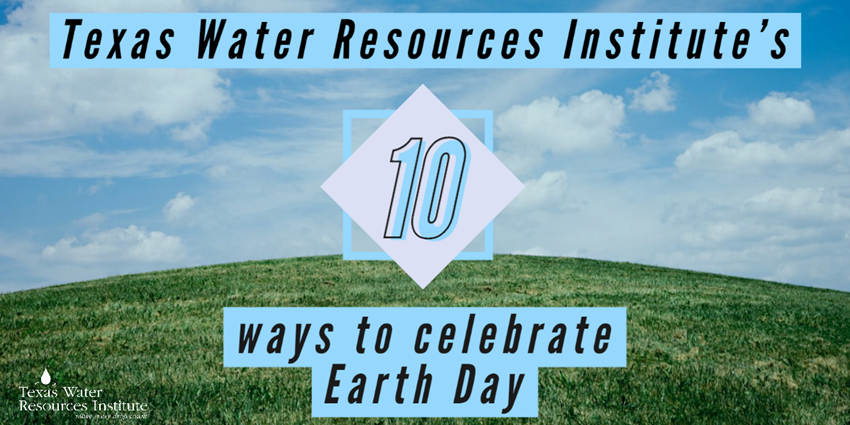
TWRI’s 10 ways to celebrate Earth Day
April 22, 2020 is the 50th anniversary of Earth Day. To commemorate this occasion, we have made a list of 10 ways to celebrate. Click the links listed below to achieve these Earth Day goals:
-
TWRI program spotlight: Our groundwater projects
For the month of March, we are spotlighting our groundwater programs, which include the Texas Well Owner Network (TWON), the Ogallala Aquifer Program (OAP), the Ogallala Water Coordinated Agricultural Project (Ogallala Water CAP) and the Transboundary Water Portal. Texas Well Owner Network Helping to protect Texas’ groundwater resources, TWON has Well Informed screenings and Well Educated training courses offered by the Texas A&M AgriLife Extension Service…
-
Partnership coordinates septic system repair, replacement
The Texas Water Resources Institute (TWRI) has been working with the Attoyac Bayou Watershed Partnership for the past decade to improve water quality, which includes repairing and replacing septic systems. How septic system impact water quality Emily Monroe, TWRI extension program specialist, said humans have been a major contributor of bacteria in the Attoyac Bayou watershed through failing or…

-
txH2O highlight: What’s your water footprint?
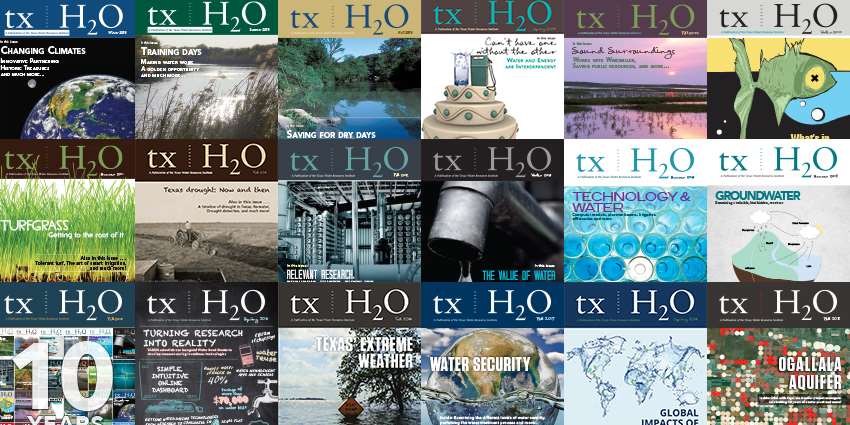
When making New Year’s resolutions for 2020, add water conservation to your goals! What’s your water footprint?, an article in our Fall 2009 txH2O, lists the amount of water used for many common activities. A water footprint is the amount of water a person directly or indirectly consumes, including “virtual water,” or water used to produce food,…
-
TWRI publishes septic system guide
Do you own a septic system? The Texas Water Resources Institute (TWRI) has published a new resource titled Septic System Maintenance & Inspection Pocket Guide. This new educational material is to help homeowners with problem solving and best management practices for their septic systems. It was developed by Nathan Glavy, TWRI extension program specialist; Stephanie deVilleneuve, TWRI research assistant;…


