Author: TWRI
-
Storms, Saltwater, Sewage and Air: Finding Freshwater in a Changing World
“As the population grows, and as climate change becomes really concerning, how can we accommodate these growing droughts?” he asked. To meet that challenge, researchers are looking for freshwater in unexpected places. Stormwater Scanlon explained the first place to find freshwater is by looking at the “too much” part of the water crisis: capturing water…

-
Bigger is Not Always Better: Decentralizing Texas’ Wastewater Infrastructure
Centralized systems: wastewater treatment plants Centralized systems or wastewater treatment plants (WWTPs) are the most common type of wastewater treatment. According to the American Society of Civil Engineers (ASCE), there are more than 16,000 WWTPs in the country. On average, these facilities operate at 81% of their designed capacity. They treat about 62.5 billion gallons of wastewater…

-
Deciphering Big Data and Water
Big data is used as the proverbial raw material that water researchers and water managers use to derive models, look for trends and train artificial intelligence (AI). It is necessary for making predictive tools about water. In short, big data is the grease that makes digital farming, adaptive resource management and smart water systems run.…
-
Working For Tomorrow’s Water
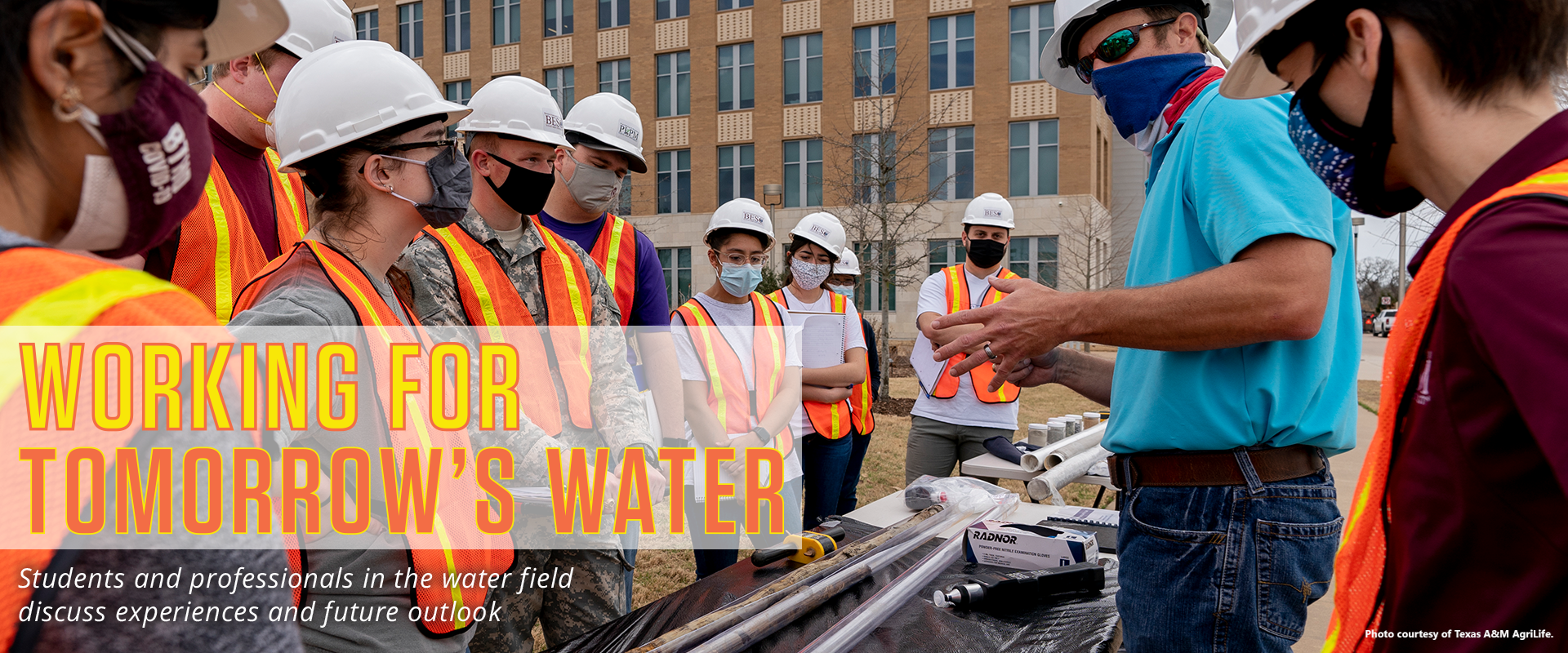
The need for wastewater workers is not a new problem. An article called “Water, but No Workers” appeared in the summer 2019 issue of txH2O that discussed the role educational institutions in Texas were filling by providing more water-related education to support those in the workforce and produce graduates ready to fill the growing need…
-
The Future of Water Infrastructure
A 2016 report by the American Water Works Association (AWWA) estimated that 15-22 million people in the United States are served by about 5.5-7.1 million water service lines — the pipes that deliver water from the municipal main or transmission line into individual homes — that are made of or contain lead. The group projected that replacing just…

-
Colonias: The Canary in the Water Security Coal Mine
Shaping water insecurity in the colonias The development of the colonias in the mid-20th century was “driven by a need for low-cost labor,” said Amber Wutich, Ph.D. Wutich is the director of the Center for Global Health at Arizona State University (ASU) and a President’s Professor of anthropology in the ASU School of Human Evolution and Social Change. That “low-cost labor”…
-
Meet a scientist: Ali Ajaz
Article originally written by September Martin From the time he first witnessed the massive irrigation infrastructure growing up in Indus River Basin in Pakistan, Ali Ajaz, Ph.D., program specialist with Texas Water Resource Institute (TWRI), has dedicated his studies and professional activities to irrigation engineering. “I come from a region which has a lot of…

-
New papers published by TWRI water team members
Members of the Texas Water Resources Institute’s (TWRI) water team have published two new papers: Direct Mailing Education Campaign Impacts on the Adoption of Grazing Management Practices and Binational reflections on pathways to groundwater security in the Mexico–United States borderlands. The paper, Direct Mailing Education Campaign Impacts on the Adoption of Grazing Management Practices, was published online in the Journal…

-
Top 10 TWRI articles from 2021
After a productive year, the Texas Water Resources Institute (TWRI) communications team has put together a list of the top 10 most-read articles, including many from the winter 2021 issue of txH2O, which focused on binational water challenges along the Rio Grande. Other articles in the list were published in Conservation Matters, the monthly newsletter about land, wildlife and…

-
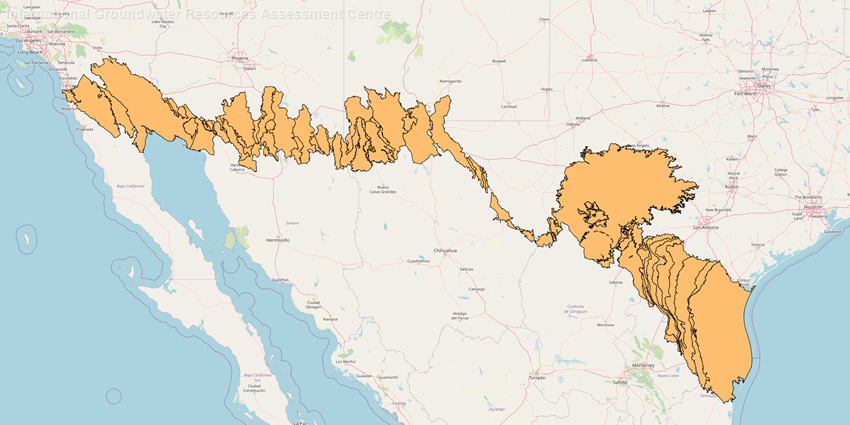
New U.S.-Mexico transboundary aquifer data included in 2021 Transboundary Aquifers of the World Map
Article originally written by Chantal Cough-Schulze The transboundary aquifers shared by the United States and Mexico are now included on the official global map of transboundary aquifers, thanks to new research by Texas Water Resources Institute (TWRI) senior research scientist Rosario Sanchez, Ph.D., and TWRI graduate research assistant Laura Rodriguez. The map, which is updated every five years,…