
Author: TWRI
-
‘Riparian Restoration on Farms and Ranches in Texas’ is now available
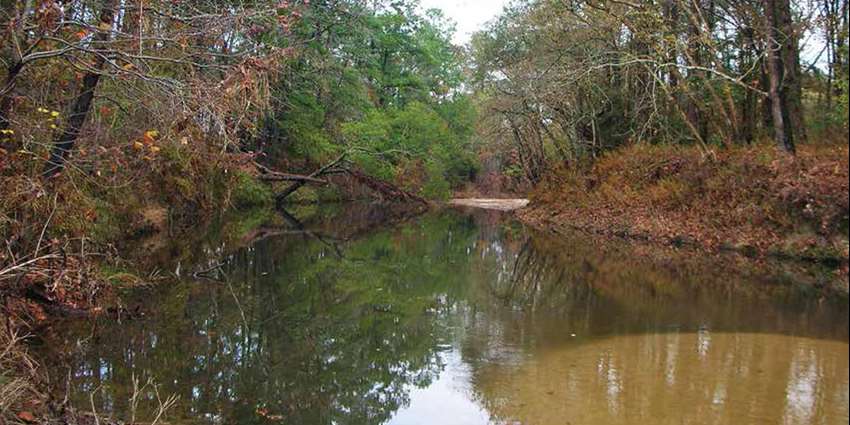
The Texas A&M AgriLife Extension Service has published a new resource for landowners and managers, “Riparian Restoration on Farms and Ranches in Texas.” The new publication, which has been given the identification number WF-010, can be downloaded for free or purchased at $3 per hard copy through the AgriLife Bookstore, said Blake Alldredge, AgriLife Extension wildlife associate at College…
-
Two Texas Parks and Wildlife Department properties achieve international ‘dark sky’ status
Texas state parks remain among the few public places in one of the nation’s most populous and increasingly urbanized states where the starry heavens can be viewed in all their celestial glory with the minimal intrusion of artificial light. Copper Breaks State Park in the Panhandle Plains and Enchanted Rock State Natural Area in the Hill Country are the…

-
AgriLife Research study: Center pivot does not always mean efficiency
Identifying, but more importantly gaining adoption, of the most efficient irrigation systems is an important step in water conservation within agriculture, according to a recent study conducted by Texas A&M AgriLife Research. Dr. Nithya Rajan, AgriLife Research agronomist in Vernon, helped complete the study by looking at different types of irrigation systems for their application…

-
Texas A&M research shows getting energy from oil and gas doesn’t require using fresh groundwater
Oil and gas exploration operations can and must operate under environmentally sound practices and according to a research study at Texas A&M University, hydraulic fracturing in the Eagle Ford Shale in South Texas can lessen its environmental impact by switching from fresh groundwater to abundant supplies of brackish groundwater. Graduate students at the Bush School of…

-
Meet a scientist: Ralph Wurbs
When you hear the word “scientist,” most likely the image that comes to mind is of someone in a lab coat with test tubes and beakers. While this is true of some scientists, there are many others who do not fit that image. This is especially true of natural resource scientists. To showcase the diversity…

-
Buck Creek Watershed Protection Plan accepted by EPA
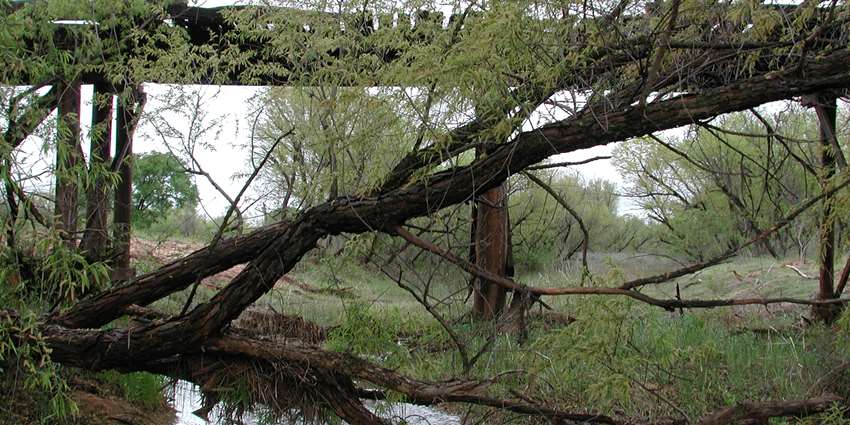
The U.S. Environmental Protection Agency has accepted the Buck Creek Watershed Protection Plan as meeting the agency’s guidelines for watershed-based plans and effectively outlining a strategy to reduce nonpoint source pollution in the watershed, according to a Texas Water Resources Institute official. “This acceptance comes after years of collaboration between local watershed landowners and stakeholders, local soil and water conservation districts,…
-
Texas A&M researcher measures water security in the Rio Grande Valley
A Texas A&M researcher has found that segments of the population, especially along the Texas-Mexico border, exist in a “no-win waterscape,” with no easy access to clean water, no ability to pay for it and no immediate solution. Dr. Wendy Jepson, an associate professor in the College of Geosciences, said the issue is a matter of…

-
New partnership effort spurs voluntary conservation for lesser prairie-chicken and agriculture
Producers partnering with the USDA-Natural Resources Conservation Service (NRCS), working through the local soil and water conservation districts, have found a workable and economically viable solution that will continue to enhance and help protect the lesser prairie-chicken habitat. The new voluntary cooperative conservation effort is making history in Texas. Rancher Clay Cooper in Lipscomb County has signed the first…

-
New League City park demonstrates ways to be ‘WaterSmart’
With help from the Texas Sea Grant Program at Texas A&M University, the city of League City has transformed a public park into a showcase for the principles of WaterSmart landscapes: water conservation, water quality and habitat for wildlife. Texas Sea Grant’s Texas Coastal Watershed Program (TCWP), a partnership between Texas Sea Grant and the Texas A&M AgriLife Extension…

-
Texas A&M researchers devise unprecedented test to detect water contamination
Imagine being able to test water for the tiniest levels of waste contamination, even at home. A team of researchers at Texas A&M University, led by Vladislav Yakovlev, professor in the Department of Biomedical Engineering, has developed a method to detect a previously undetectable level of contamination in water associated with human and animal fecal matter.…