
Category: 2015
-
Soil and Water Stewardship Week is April 27-May 4
The Texas Water Resources Institute (TWRI) and Texas A&M Institute of Renewable Natural Resources (IRNR) have partnered with the Association of Texas Soil and Water Conservation Districts, Texas Wildlife Association, Texas State Soil and Water Conservation Board and 13 other organizations to highlight the important connection between voluntary land stewardship and sustaining water availability as…

-
Mills Scholar researches turfgrass water needs
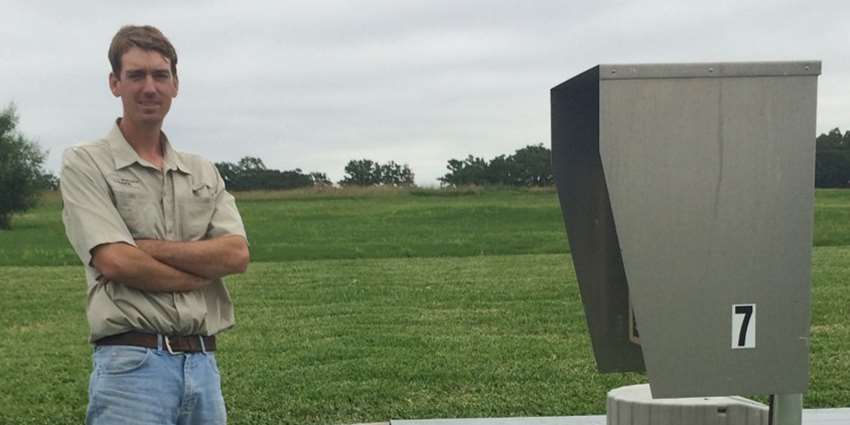
Charles Fontanier, a doctoral student in Texas A&M University’s Water Management and Hydrological Sciences Program, believes that most Texans want to conserve water, even when it comes to watering their lawns. He hopes his research helps them understand that they can save water and have their lawns too. “I think most people want to conserve…
-
Cultivating conservation: Howdy Farm promotes stewardship in Aggieland
A quick look around Texas A&M University is all you need to see that the campus and the surrounding community are becoming more urbanized. But, this is not necessarily at odds with Texas A&M’s history as an agricultural college. A growing on-campus farming venture is linking Texas A&M’s agricultural heritage to today’s Aggieland, while adopting…

-
Don’t miss new Texas Water Journal issue
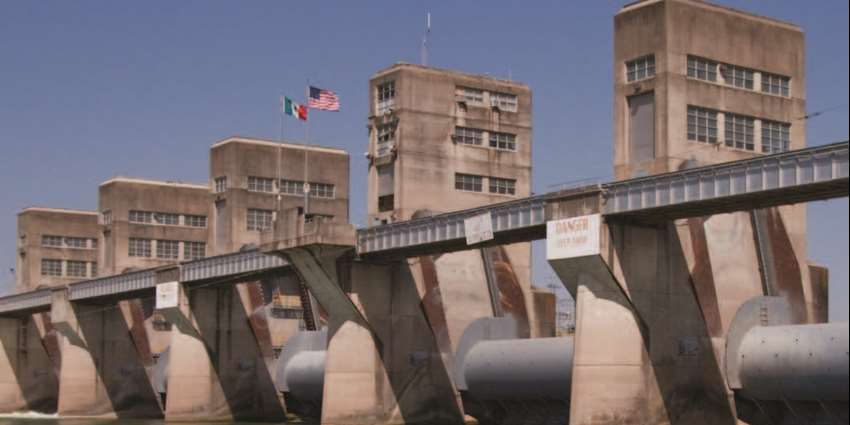
An invited commentary by the chairman of the Texas Water Development Board on the Texas-Mexico water treaty and an article on the Rincon Bayou Pipeline on the Lower Nueces Delta are the first two articles in the 2015 issue of the Texas Water Journal. The online, peer-reviewed journal is published jointly by the Texas Water Resources Institute and…
-
TWRI grant recipient quantifies horizontal well cost-benefit, creates new models
Constructing a water well begins with making several design decisions, including whether to drill the well horizontally or vertically. Ben Blumenthal, former Texas Water Resources Institute (TWRI) research assistant, investigated the use of horizontal drilling technology for groundwater production and developed mathematical models that simplify that decision-making process. “Horizontal wells are very advantageous for petroleum production, as evidenced…

-
How drought-tolerant are Central Texas’ favorite landscape plants?
Does a tough modern rose really need 4 inches of water a month to survive a drought? Can a plant bounce back after an entire growing season without rain? A group of Central Texas entities is hoping to find these and other answers by analyzing popular local landscape plants in a drought-survivability study. The Texas A&M…

-
Planning for the next Big One
In May 2011, Texas was in the midst of the worst one-year drought in its recorded history. At many lakes, boat ramps stood isolated far from the water’s edge, and on many ranches, owners sold their cattle because their land couldn’t support the livestock. Four years later — May 2015 — Texas recorded its wettest…

-
A decade of solving water quality mysteries
By Leslie Lee More than 10 years ago, the Texas Bacterial Source Tracking (BST) Program began filling a need in the state’s water quality efforts that no other program was pursuing: in-stream measurements of the specific human and animal sources of bacterial nonpoint source pollution in local watersheds. Before BST technology, water quality restoration projects relied on…

-
Getting to know State Climatologist John Nielsen-Gammon
On the top floor of Texas A&M University’s Oceanography and Meteorology Building, overlooking the east entrance to campus, sits the Office of the Texas State Climatologist. Prior to the 2011 drought, its occupant, Dr. John Nielsen-Gammon, was a man very few people had heard of. Since then, he has become a well-known resource for journalists, researchers, industry…

-
Looking to the future
By Eva Vigh Texans in drought-susceptible areas face an arid future without knowledge of water management and planning. According to environmental experts, the best place to begin teaching these strategies is schools. Introducing water education to children is critical to ensuring adequate clean water for future generations. Various Texas water education programs such as Water4Otter, International Junior…


