

Category: 2017
-
USGS gives update at midpoint of national groundwater survey
The U.S. Geological Survey (USGS) is near the midpoint of a complex survey of the quality of the nation’s groundwater, its largest drinking-water resource, according to a recent news release. From 2012 to 2023, USGS is assessing groundwater throughout the country through extensive sampling The USGS has identified 68 principal aquifers, or regionally extensive aquifers that…

-
Texas Water Roundtable set for Feb. 2 in Austin
The 3rd annual Texas Water Roundtable will be held Feb. 2 from 1-3:30 p.m. in the Capitol Auditorium, at the state capitol in Austin. The event’s theme is “Water: the highway to Texas’ future,” and the agenda includes government officials as well as speakers from both public agencies and private industry. Panels will address the economics of water…

-
Chronic wasting disease rule proposal republished for comment
The Texas Animal Health Commission (TAHC) has announced that its chronic wasting disease rule proposal, originally published for comment on Dec. 30, 2016, has been republished in the Texas Register, due to editing errors. According to TAHC, the original rule publication in the Texas Register omitted subsections (f) – (h). TAHC has extended the comment period, and the deadline…

-
Understanding water security
The term “water security” means different things to different people. For some, water security means simply having enough clean water to drink when they turn on the faucet; for others, water security involves having existing infrastructure to deliver the water, and still for others, it means guarding a nation’s water resources against bioterrorism. Hurricane Harvey…
-
On the border
Portney, professor and director of the Institute for Science, Technology and Public Policy at the Bush School, said the initiative has two related parallel projects, one focusing on water governance, policy and management specifically on the Texas-Mexico border and the other extending the analysis to the New Mexico and Arizona borders with Mexico. He said…

-
How does water quality monitoring work?
By Leslie Lee One way the Texas Water Resources Institute (TWRI) contributes to water security in Texas is by monitoring water quality in rivers and streams that are subjects of watershed restoration processes. Healthy watersheds help keep regional water supplies clean and plentiful. When a watershed restoration project begins, TWRI professionals typically conduct water quality…

-
Microfilters, Major Results
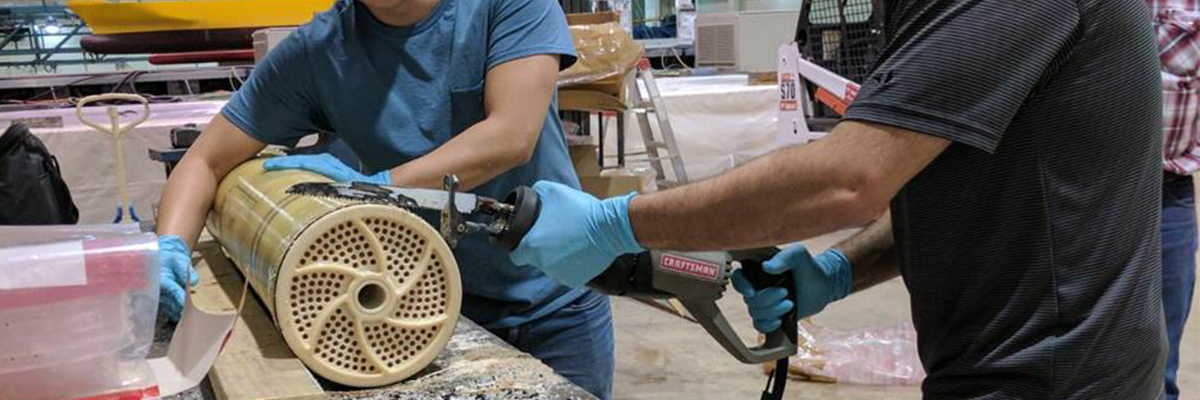
As water suppliers have built water reuse and inland desalination plants throughout Texas, new treatment infrastructure was needed to continue providing enough high quality water. These plants cannot function without such rigorously tested water filters; many water plants use about 100 of them simultaneously throughout their facilities and daily processes. According to state water planners,…
-
Safe water = Secure water
“There are so many pharmaceuticals out there and so little money,” she said, “so prioritizing which compounds to look at is a huge deal. To start doing toxicity testing for each of those is too expensive.” One way to prioritize, Cizmas said, is to examine quantitative structure activity relationships, which is identifying a problematic compound,…

-
Earning High Marks
“When you urbanize an area, instead of rainwater infiltrating, runoff goes into stormwater pipes and that results in a lot of damage downstream,” he said. Urban watersheds also cause increased flooding and reduced groundwater recharge. However, Jaber said LID practices use natural elements to minimize negative environmental impacts of urbanization. “One of the benefits of…

-
When hometown waters draw you back again
“Growing up along the coast, I was always interested in the environment,” Benavides said. “I grew up on a resaca and frequently went fishing as a young kid — I was always outdoors.” A mentor told teenage Benavides about the water and environmental opportunities that a civil engineering degree could open up to him, and…


