

Category: 2020
-
AgriLIfe Center Dallas, Dallas Center
In our November 2019 Conservation Matters, our program spotlight focused on the Texas A&M AgriLife Center at Dallas, or Dallas Center. The Dallas Center, known for its urban water conservation work, was recently renovated and serves as a demonstration of green infrastructure and native plants for sustainability in urban development. Two 30,000-gallon display cisterns and one…

-
ICYMI: Dallas Center program spotlight
In our November 2019 Conservation Matters, our program spotlight focused on the Texas A&M AgriLife Center at Dallas, or Dallas Center. The Dallas Center, known for its urban water conservation work, was recently renovated and serves as a demonstration of green infrastructure and native plants for sustainability in urban development. Two 30,000-gallon display cisterns and one…

-
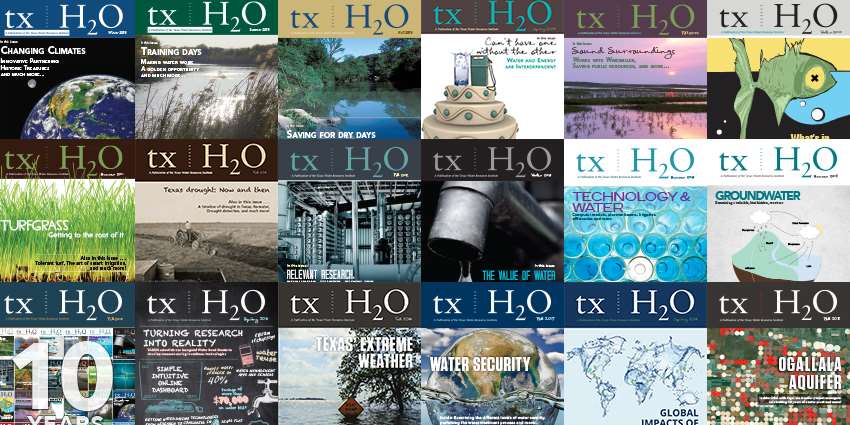
txH2O highlight: The key to perfecting water reuse?
With Texas’ decreasing water availability and increasing water demand, a growing number of water providers are using or considering water reuse, either direct or indirect, for drinking water. In the spring 2016 issue of txH2O, TWRI published an article about scientists from the Texas A&M University System successfully demonstrating the feasibility of using electron beam, or eBeam, to…
-
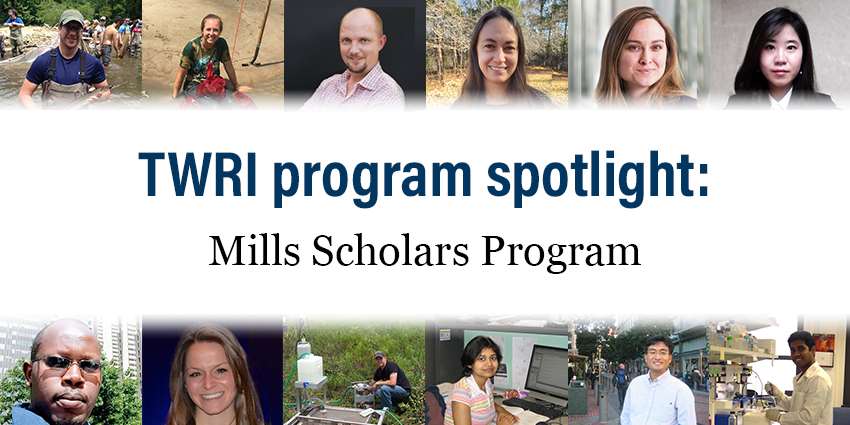
TWRI program spotlight: Mills Scholars Program
Article originally written by Kathy Wythe The Texas Water Resources Institute (TWRI)’s program spotlight for January is the Mills Scholars Program. Throughout the past five decades, TWRI has awarded Mills Scholarships to select Texas A&M University graduate students studying water resources and hydrology issues in Texas. The program aims to fund research that will help…
-
Pervasive problem
Those bonds make them so good at persisting in the environment and the human body that they’ve earned the nickname “forever chemicals.” PFAS are also highly heat resistant and repel both water and oil, which is why they are used in firefighting foam. Dr. Kung-Hui “Bella” Chu, a professor in Texas A&M University’s Zachry Department of…

-
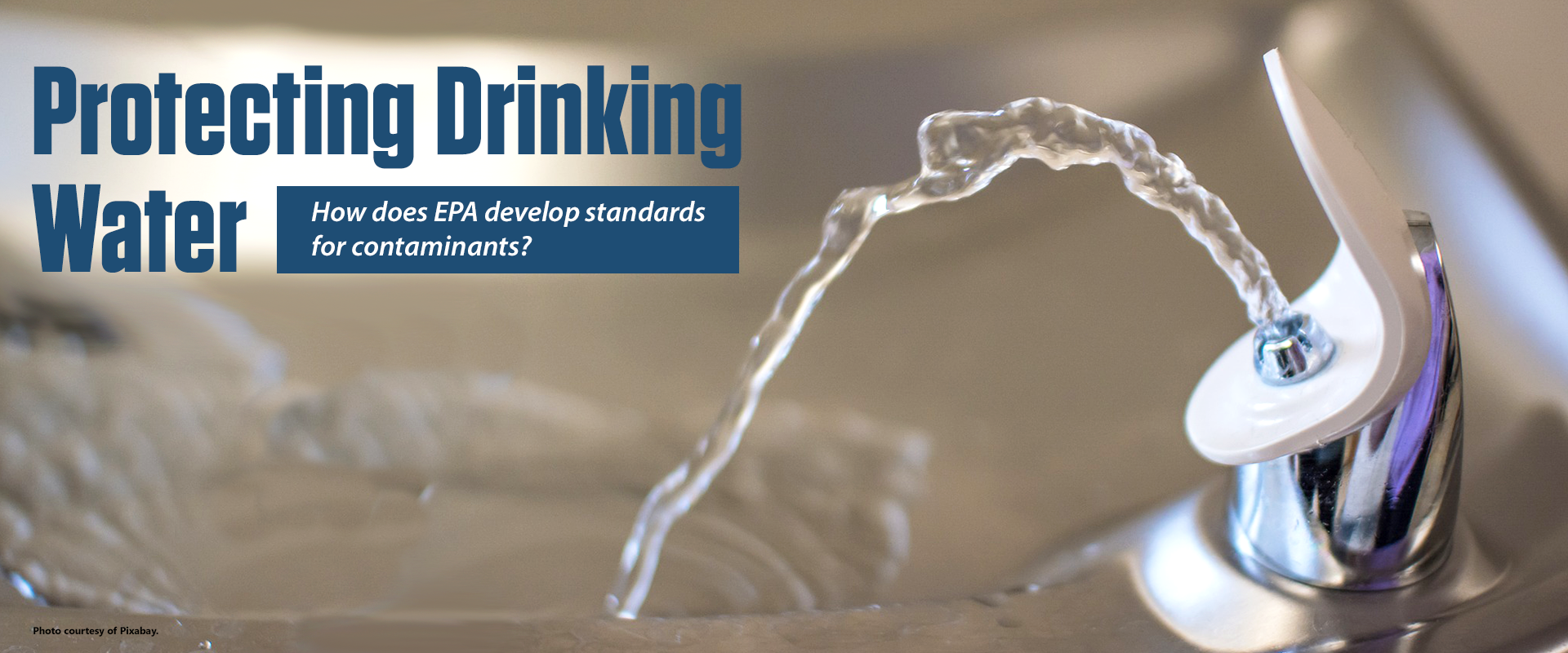
Protecting Drinking Water
Arsenic is just one of the many contaminants that has been regulated by EPA under the SDWA since its establishment. Sometimes, how those regulations are made — and what happens once they’re made — can feel like a bit of a black box. Under the SDWA, EPA sets standards to protect drinking water. When new…
-
Determining Friend from Foe
The current understanding, Han said, is that only about 1% of the microorganisms in the environment are known, and even among that 1%, only a small percentage is well understood. Of those millions of unknown bacteria, some are “friends,” but some may be “foes.” While information learned from this research will potentially help DOD identify…

-
Health at the Nexus of Water Insecurity
Defining water insecurity People often don’t think of water insecurity being a problem in the United States, said Dr. Wendy Jepson, University Professor in Texas A&M University’s Department of Geography. As a result, the water insecurity that does exist can get swept under the rug, she said. “It’s not to say that our entire water system has…

-
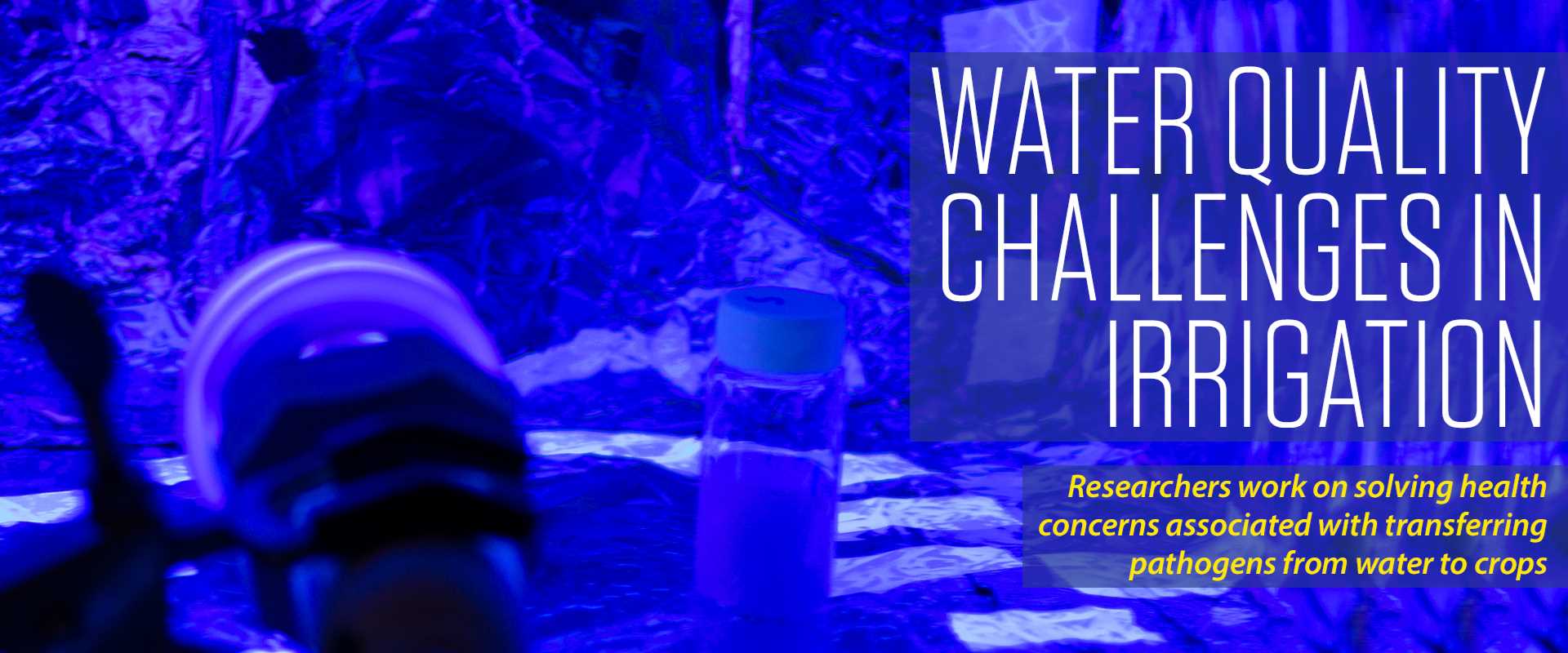
Water Quality Challenges in Irrigation
The SmartPath team is focusing its research in states with varying growing conditions to ensure SmartPath will be adaptable to multiple environments. The lead for the project, Dr. Eric McLamore, an associate professor in the Department of Agricultural and Biological Engineering at UF/IFAS, said the plan is to develop, test and implement software that will provide decision-making support…
-
Working wonders with Farrate
The chemistry of ferrate Understanding his research takes a brief review of chemistry. Chemical elements have atoms, and each atom is composed of a nucleus that contains neutrons and protons with electrons orbiting the nucleus. Varying the number of protons or electrons changes the composition and properties of the element. If electrons are removed, the…


