

Category: 2021
-
Texas Water Journal publishes new article on Seadrift wind-aided wastewater treatment plants
The Texas Water Journal has published a new article in Volume 12 titled Economic Analyses of the Seadrift Wind-Aided Wastewater Treatment Plant Operations, by Ange H. Abena Mbarga, Ken Rainwater, Lianfa Song, Theodore Cleveland and W. Ross Williams. According to the article, Seadrift is a city located on the Texas Gulf Coast with a population of 1,364 people. In…
-
Texas A&M University’s Lacewell honored with lifetime achievement award
Article originally written by Kerry Halladay Texas A&M University’s Ron Lacewell, Ph.D., and Utah State University’s Mac McKee, Ph.D., are the 2021 recipients of the Universities Council on Water Resources (UCOWR) Warren A. Hall Medal for lifetime achievement in water resources. This is the first time in the award’s history that it has been jointly…

-
Request for proposals for Water Programs of Excellence for fiscal years 2022-2023 announced
Texas A&M AgriLife Research, Texas A&M AgriLife Extension Service and the Texas A&M Engineering Experiment Station (TEES) are seeking multidisciplinary Program of Excellence proposals that will lead to forward-thinking water research and extension activities, and position teams to successfully secure large, competitive extramural resources. Proposals submitted to the FY2022-23 Water Exceptional Item, “Development of Water Programs of Excellence,” should…

-
txH2O highlight: Planning for the next big one
With hurricane season approaching, this txH2O highlight is an article about planning for flooding in Texas. The article, Planning for the next big one, asks researchers about innovative flood solutions. According to the article, although flooding is an expected natural occurrence, most years Texas leads the country in flood-related causalities and damages. Experts said that increased population, urbanization…
-
May is American Wetlands Month
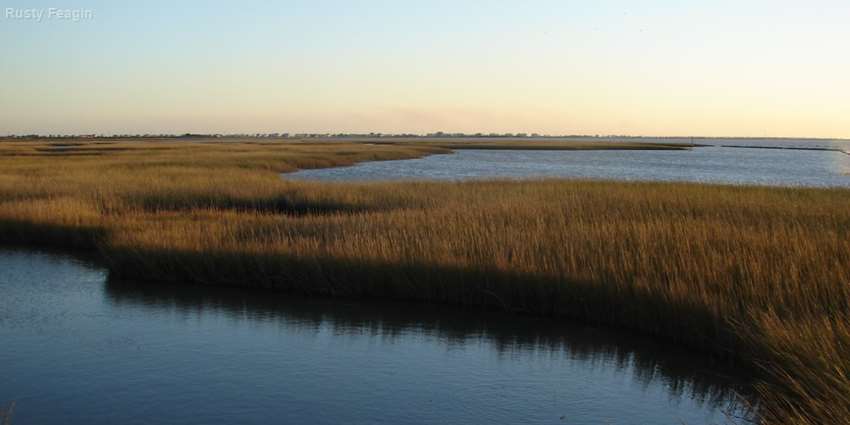
May is American Wetlands Month, celebrating the ecological, economic and social importance of wetlands. American Wetlands Month was established in 1991 by the Environmental Protection Agency. Wetlands are areas of land that are permanently or seasonally inundated with water, like marshes, swamps and bogs. These water sources are critical ecosystems that house fish, plants and wildlife. Wetlands also act…
-
Arbor Day and every day: Trees essential to clean drinking water
Article originally written by Linda Moon, communications manager, Texas A&M Forest Service On this National Arbor Day, when the nation and much of the world are celebrating trees and the many benefits they provide, Texas A&M Forest Service is focusing on the connection between forests and drinking water. Half of the fresh water produced in Texas comes from…

-
New txH2O issue is published with a focus on the Rio Grande
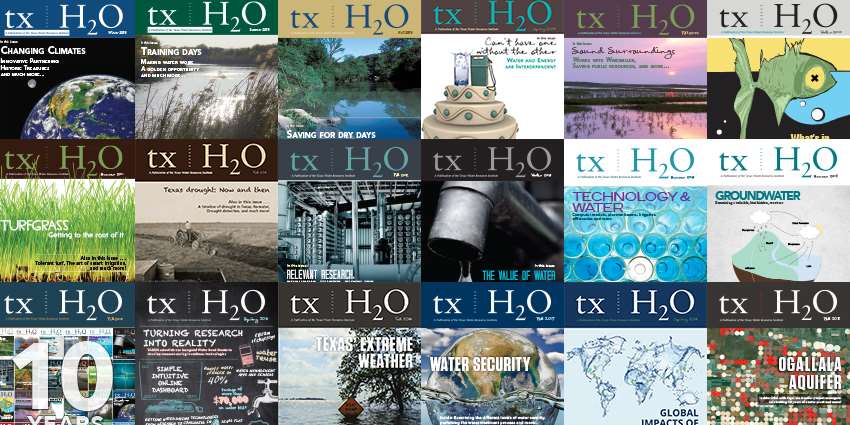
The Texas Water Resources Institute recently published the Winter 2021 issue of its magazine, txH2O, spotlighting the Rio Grande. Staff writers interviewed water researchers, irrigation experts, water district managers and more to learn about the issues along the big river and research efforts in place to overcome these challenges. The articles Getting to Know the Rio Grande and How the…

-
Meet a scientist: Robert Mace
Article originally written by Ava English Robert Mace, Ph.D., is the Executive Director and Chief Water Policy Officer at The Meadows Center for Water and the Environment and a professor in the Department of Geography at Texas State University. Mace has worked as a water researcher for over 30 years, and his affinity for solving problems about the natural world…

-
Meet Duncan Kikoyo, TWRI’s new research specialist
Duncan Kikoyo, Ph.D., has joined the Texas Water Resources Institute (TWRI) team as a research specialist. His work will focus on the development and implementation of watershed protection plans, total maximum daily loads and their implementation plans, and other projects that address critical water issues in Texas. He is most excited about working with the…

-
Embracing weirdness: a photo essay of year working from home
Article originally written by Chantal Cough-Schulze Like so many people, TWRI staff started working from home about a year ago due to the COVID-19 pandemic. Since then, new employees have started but never met in person. Babies — human, cattle, cat and otherwise — have been born. Workshops have shifted online, and Monday morning coffee pot conversations…


